
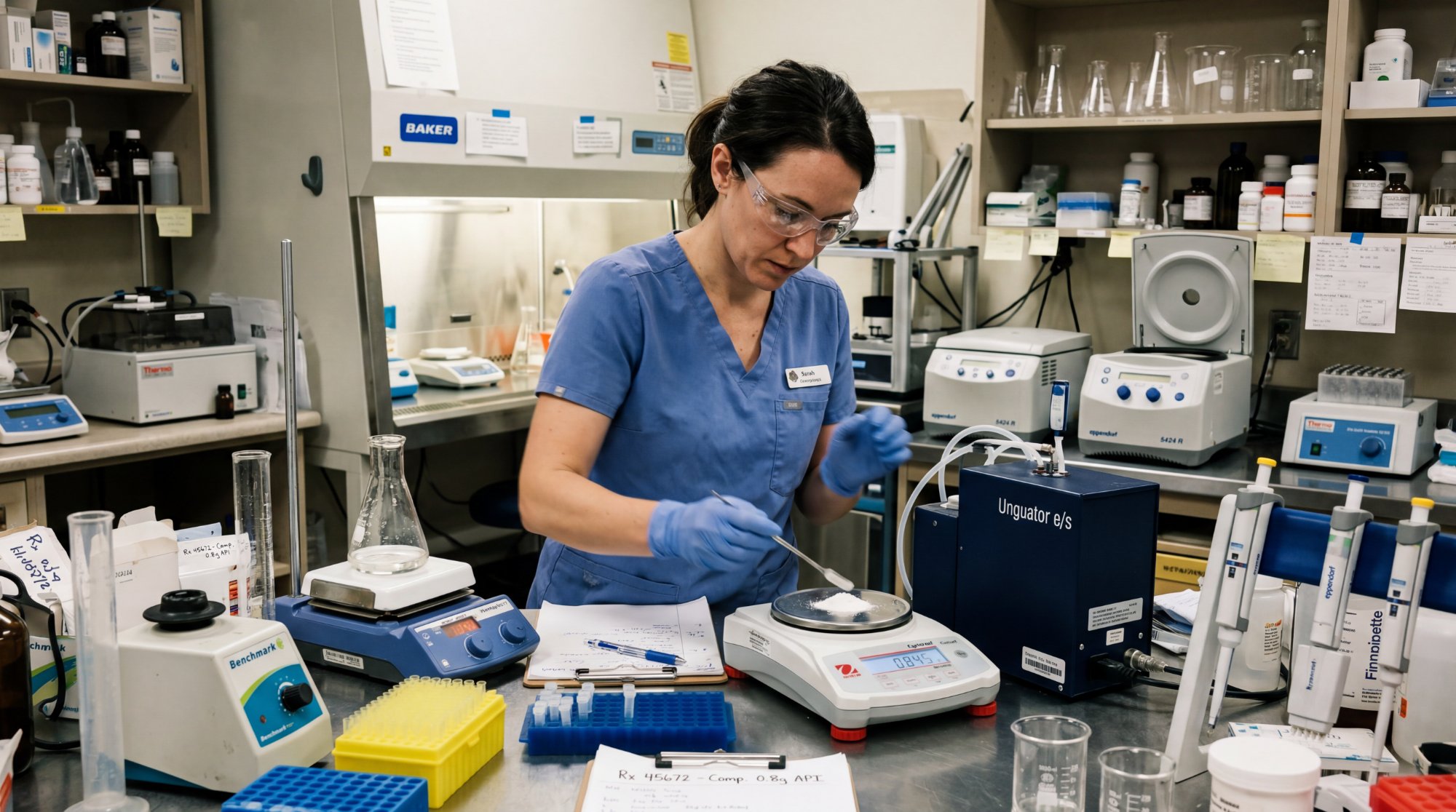
It starts in a compounding pharmacy. Not the kind you're picturing — not a back room mixing creams.
Under FDA regulations, compounding pharmacies operating at this scale maintained clean rooms, analytical laboratories, and qualified clinical pharmacists and chemists on staff. In practical terms, this was closer to a small-scale pharmaceutical R&D facility than a high street chemist.
The patients came in with pain. Post-surgical patients who couldn't sleep. Women recovering from childbirth with no safe options because they were breastfeeding. People with chronic wounds that wouldn't heal and wouldn't stop hurting. They'd already tried everything on the pharmacy shelf — the lidocaine creams that wore off in an hour, the menthol gels that did almost nothing, the diclofenac that required four applications a day and still left them reaching for pills by evening.
The pharmacy didn't hand them a standard tube and wish them luck.
They formulated. Tested. Listened to what patients and their treating physicians reported back. Reformulated. Adjusted concentrations, carriers, penetration enhancers. Listened again. Every outcome was documented — what worked, what didn't, how long the relief lasted, what the side effects were. Then they reformulated again.
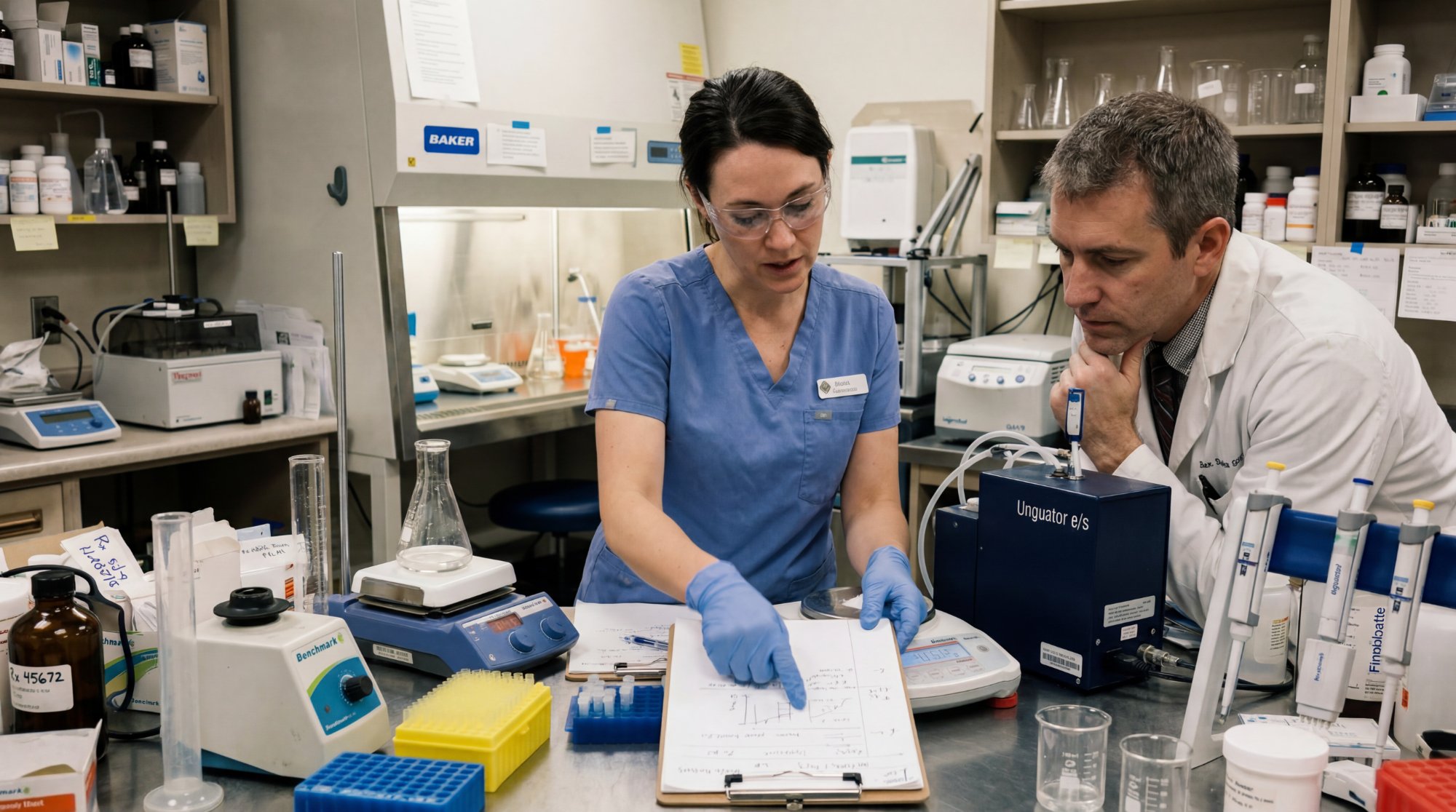
This went on for seven years. Over 7,000 patients. Thousands of formulation cycles. A feedback loop between bench chemistry and bedside reality that most pharmaceutical companies never build — because the economics don't justify it and the patience doesn't exist.
But something happened that doesn't usually happen in this industry. The formula converged. Not incrementally better — fundamentally different.
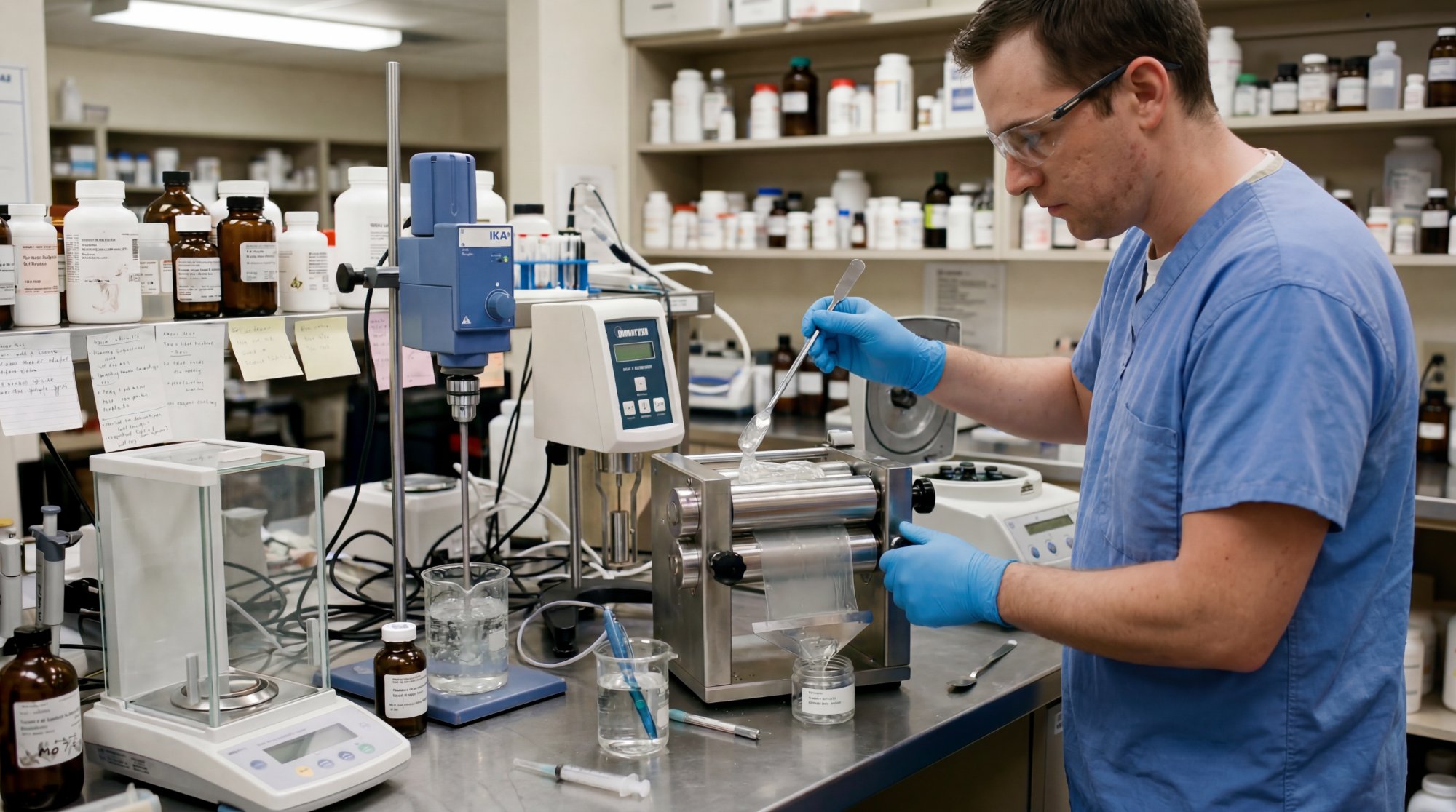
A single application that delivered pain relief lasting up to 12 hours. No systemic absorption. No opioid risk. Safe enough that nursing mothers could use it — breast milk transfer measured below detection threshold. And beyond just numbing: it reduced inflammation and promoted wound healing.
That wasn't supposed to be possible from a topical.
Zero serious adverse events.
The formulation was tested in a randomized controlled trial at Mount Sinai Hospital — one of the top-ranked medical institutions in the country. Forty-six postpartum women. The results were published in a peer-reviewed journal. Statistically significant pain reduction. Clean safety profile. A single application lasting up to 12 hours.
In pharmaceutical terms, that's not a concept. That's a clinical asset.
"Most companies would have stopped there."
A validated formulation. A published trial at a world-class hospital. A clear path to licensing or acquisition. That's a reasonable exit for most ventures.
But the data told a bigger story.
Seven years of clinical intelligence sat in those files — dosing patterns, tolerability signals, efficacy curves across pain types, formulation adjustments and their outcomes. Not a summary. Not an abstract. The raw, patient-level data from 7,000+ treatments with novel topical pain formulations.
This was a proprietary dataset for topical analgesics that didn't exist anywhere else. Not in any public database. Not in any pharma company's archives. Because nobody else had spent seven years doing what this team had done.
The cohort was collected in licensed, regulated compounding practice under our own protocols. First-party. Structured. Longitudinal. Rights-clean. Every formulation, every dose, every time-stamped outcome — joinable to the Mount Sinai trial and to every trial that follows.
So instead of selling one drug, a different decision was made: develop the formulation into a novel chemical entity — a new prodrug with composition-of-matter patents, the kind of IP that underpins billion-dollar drug franchises and makes an asset genuinely acquirable — and simultaneously build an AI platform around that proprietary clinical dataset. Not to discover one drug. To generate a pipeline.
AAI-201
Novel prodrug. Not a reformulation. New chemical entity. Composition-of-matter IP. Validated in 7,000+ patients. Published clinical trial. Now entering FDA Phase 2a.
A translational engine for pain
Trained on seven years of our own patient outcomes. Give it the pain to be treated and how the drug should behave; it returns a ranked shortlist of molecules scored against what actually worked in our patients — and the design of the trial that proves it. The drug gets acquired. The engine stays and designs the next one.
"One company. Two assets. One dataset that took seven years and 7,000 patients to build — and that no competitor can replicate by starting today."